They've got the brand names of popular black and white e-readers. But the Kindle Fire and Nook Tablet are, as the latter's name implies, basically miniature tablets like the iPad. (The Nook Color is also; it's a cheaper version of the Nook Tablet.)
They're like the iPad in that they have color, glass multitouch screens, and reasonably powerful hardware inside. They're not as big or as powerful as the iPad, but they're only about half the size and half the cost. And that hardware doesn't go to waste, either. Here's what you can do with them besides read (and buy) e-books:
Web Browsing
Full-sized websites look a bit cramped on the 7-inch screens, and the text can be a bit tiny. You can double-tap to zoom in, though, and the browser will reflow the text to make it fit the screen width once it's a reasonable size. And on mobile sites, the experience is even better, as the buttons that were designed for smartphone users are especially easy to hit.
The Nook browser requires you to scroll to the top to bookmark a page or navigate it, but has most of the features that you would expect from a web browser.
Music
A Kindle or Nook can provide a soundtrack for reading books, or they can serve as portable music players when carried in a handbag. The built-in music apps are serviceable, and apps for Pandora, Grooveshark, and other streaming music services are available when you have Wi-Fi access. The Nook can sync music to its built-in memory or microSD card, and the Kindle can sync with your Amazon Cloud Drive account and buy new songs from Amazon's MP3 store.
Games and Apps
Neither the Nook nor the Kindle has the tens of thousands of tablet apps available for the iPad. And while they run Google's open-source Android operating system "under the hood", neither one has access to the Android Market, either.
Amazon has an "Appstore," though, and Barnes and Noble has its own selection of apps for the Nook. The Nook's catalog is considerably weaker, but both have a good-sized assortment of "name brand" games and apps, including Evernote, Netflix and Angry Birds.
If you rely on a particular tablet app, you may not be able to find it in either store. There's often a web version of today's popular apps, though, which you can access online through a web browser while you're on Wi-Fi.
Jared Spurbeck is an open-source software enthusiast, who uses an Android phone and an Ubuntu laptop PC. He has been writing about technology and electronics since 2008.
FILE - In this March 16, 2011 file photo, Defense Undersecretary Michele Flournoy testifies on Capitol Hill in Washington. The Obama administration is preparing to begin talks with Iraq on defining a long-term defense relationship that may include expanded U.S. training help, according to Defense Secretary Leon Panetta?s chief policy aide. Flournoy, who is leaving her Pentagon post to return to private life, said in an interview with a small group of reporters that the administration is open to Iraqi suggestions about the scope and depth of defense ties. "One of the things we?re looking forward to doing is sitting down with the Iraqis in the coming month or two to start thinking about how they want to work with" the U.S. military to develop a program of exercises, training and other forms of security cooperation, Flournoy said. (AP Photo/Cliff Owen, File)
FILE - In this March 16, 2011 file photo, Defense Undersecretary Michele Flournoy testifies on Capitol Hill in Washington. The Obama administration is preparing to begin talks with Iraq on defining a long-term defense relationship that may include expanded U.S. training help, according to Defense Secretary Leon Panetta?s chief policy aide. Flournoy, who is leaving her Pentagon post to return to private life, said in an interview with a small group of reporters that the administration is open to Iraqi suggestions about the scope and depth of defense ties. "One of the things we?re looking forward to doing is sitting down with the Iraqis in the coming month or two to start thinking about how they want to work with" the U.S. military to develop a program of exercises, training and other forms of security cooperation, Flournoy said. (AP Photo/Cliff Owen, File)
WASHINGTON (AP) ? The Obama administration is preparing to begin talks with Iraq on defining a long-term defense relationship that may include expanded U.S. training help, according to Defense Secretary Leon Panetta's chief policy aide.
Michele Flournoy, who is leaving her Pentagon post on Friday to return to private life, said in an interview with a small group of reporters that the administration is open to Iraqi suggestions about the scope and depth of defense ties.
"One of the things we're looking forward to doing is sitting down with the Iraqis in the coming month or two to start thinking about how they want to work with" the U.S. military to develop a program of exercises, training and other forms of security cooperation, Flournoy said.
The U.S. military completed its withdrawal from Iraq in December after nearly nine years of war. Both sides had considered keeping at least several thousand U.S. troops there to provide comprehensive field training for Iraqi security forces, but they failed to strike a deal before the expiration of a 2008 agreement that required all American troops to leave.
As a result, training is limited to a group of American service members and contractors in Baghdad who will help Iraqis learn to operate newly acquired weapons systems. They are part of the Office of Security Cooperation, based in the U.S. Embassy in Baghdad and headed by Army Lt. Gen. Robert Caslen.
Additional and more comprehensive training is a major issue because Iraq's army and police are mainly equipped and trained to counter an internal insurgency, rather than deter and defend against external threats. Iraq, for example, currently cannot defend its own air sovereignty. It is buying ? but has not yet received ? U.S.-made F-16 fighter jets.
In a new report on conditions in Iraq, a U.S. government watchdog agency said the Iraqi army is giving so much attention to fighting the insurgents that it has had too little time to train for conventional combat.
"The Iraqi army, while capable of conducting counterterrorism and counterinsurgency operations, possesses limited ability to defend the nation against foreign threats," said the report submitted to Congress Monday by the Special Inspector General for Iraq Reconstruction, Stuart W. Bowen, Jr.
In an introductory note, Bowen wrote that while Iraq's young democracy is buoyed by increasing oil production, it "remains imperiled by roiling ethno-sectarian tensions and their consequent security threats."
Iraq has seen an upswing in violence since the last U.S. troop left, but senior U.S. officials have remained in touch in hopes of nudging the Iraqis toward a political accommodation that can avert a slide into civil war.
Vice President Joe Biden spoke by phone on Saturday with Osama Nujaifi, speaker of the Council of Representatives. And Biden spoke on Friday with a key opposition figure, Ayad Allawi, a former interim prime minister and a secular Shiite leader of the Iraqiya political bloc. Allawi has said Iraq needs to replace its prime minister, Nouri al-Maliki, or hold new elections to prevent the country from fracturing along sectarian lines.
In a positive sign, Iraq's Sunni leaders announced on Sunday that they will end their boycott of parliament. That may have paved the way for the political leadership to hold a national conference led by President Jalal Talabani to seek reconciliation and to end a sectarian political crisis.
George Little, the Pentagon press secretary, said Sunday that Panetta remains optimistic about the outlook in Iraq despite worsening violence.
"The secretary believes that the Iraqi people have a genuine opportunity to create a future of greater security for themselves, and that senseless acts of violence will not deter them from pursuing that goal," Little said. "The United States remains committed to a strong security relationship with Iraq."
U.S. officials have said they aim to establish broad defense ties to Iraq, similar to American relationships with other nations in the Gulf, including Saudi Arabia, Kuwait, the United Arab Emirates, Qatar, Oman and Bahrain.
Flournoy, 51, is stepping down from her position as undersecretary of defense for policy on Friday after three years in the job. She is the first woman to hold that post. Her chief deputy, Jim Miller, has been picked to succeed her.
In the interview last week, Flournoy reiterated that she is leaving government to focus more on her family. She and her husband, W. Scott Gould, have three children aged 14, 12 and nine.
She came to the Pentagon in February 2009 from the Center for a New American Security, where she was the think tank's first president. She had served in the Pentagon in the 1990s as a strategist.
Flournoy said in an Associated Press interview in December when she announced her decision to quit that she intends to play an informal role this year in supporting President Barack Obama's re-election effort. She was a member of his transition team after the November 2008 election.
___
Robert Burns can be reached on Twitter at http://www.twitter.com/robertburnsAP
COMMENTARY | Presidential hopeful Newt Gingrich came under fire -- mostly for economic reasons -- when he proposed at the CNN Republican Presidential Debate in Jacksonville that he would like to have a permanent moon base on Earth's lone satellite by the end of his second term as president. But even if his ideas have some logistical hurdles to cross, there is ample reason to believe that an American moon base could be operational in a decade or two. Besides, the space race never really went into hiatus; the major players merely took a slower track, giving others a chance to enter the race.
A Moon Base By 2020?
There are several reasons to develop a moon base: military and strategic, scientific, economic, or simply territorial. But Gingrich's moon base ideation may have been spurred by the growing interest of other nations in reaching the moon. With a sort of Kennedy-esque vision of national direction, Gingrich revived the dream of not only reaching the moon, but obtaining a bit of it for the American people. A 2020 date might be somewhat optimistic, but he said he'd like to set up shop before China, which has plans to put a man on the moon by 2024.
The Obama administration has decided to forego the moon, concentrating on research and development, cooperating in international space endeavors, planning a future mission to an asteroid, and getting to Mars by 2035. But no moon mission. In fact, President Obama told his audience, which included moonwalking astronaut Buzz Aldrin, when he laid out his Space Policy at the John F. Kennedy Space Flight Center in Florida in April 2010, "We've been there before. Buzz has been there."
A Renewed Space Race?
The United States is the only country to have ever placed moonwalkers on the lunar surface. Twelve, in fact. However, with the development of several space agencies around the planet, that could soon change to simply being the first.
As mentioned, China has designs on getting to the moon. A Hong Kong newspaper reported in 2006 (recounted by Reuters) that a top Chinese space program official stated that China planned its first moonwalk for 2024. A moon base, territory grab, and mineral extractions will then begin, according to Robert Bigelow, founder of the private space company Bigelow Aerospace, who told Discovery Newsthat the moon is the obvious next step in human exploration and development. And although there exists an international space treaty, the Declaration of Legal Principles Governing the Activities of States in the Exploration and Use of Outer Space, that prohibits any one nation or organization from owning through claim, use, or other means any part or all of the moon, that will have little bearing on the situation at hand once a nation establishes an outpost of some kind on the lunar surface. History is littered with broken treaties.
JAXA (Japan Aerospace Exploration Agency) also revealed in 2006 in an AFP report its long-range plans for putting a man on the moon by 2030. Spokesman Satoki Kurokawa stated that Japan hoped to get a man on the moon by 2020.
India, which has sent unmanned orbiters to the moon, has also expressed an interest in a moon base.
What About Russia?
Gingrich's moon base could also see realization in renewed efforts by the Russians to reach the moon. A Cold War competitor as part of the Soviet Union, the Russian Space Agency Roscosmos announced Jan. 19 (per BDK) that they had enjoined talks with European and American space partners about a possible base or manned orbiter.
So was Gingrich's idea a lunatic's dream? Hardly. And with all the attention his moon base comments have received, they could very well spark renewed interest in America's manned space program, which ended with the touchdown of the shuttle Atlantis in July.
>>our political director and chief white house correspondent
chuck todd
joins me from our washington news room. it seems
gingrich
and
romney
see the path to the nomination is on this question of elect ability. who can face down
barack obama
in the
general election
. is that's what's driving this increasingly heated rhetoric we're hearing?
>>it seems to be driving
romney
's numbers up. the number one issue, quality in our poll, elect ability.
romney
had even a bigger lead on
gingrich
on that one. yes, electability is driving this a little bit, particularly in
florida
. these big, larger states, unlike iowa and new hampshire,
south carolina
, where you get more of a chance to know niece candidates, in
florida
it's all about tv ads. that's been another advantage for
romney
. he's carpet-bombed the state in a way you can tell it's gotten under
gingrich
's skin. the question i have, lester, what does
gingrich
do after
florida
if he indeed does lose? because there's an awful lot of
space and time
before he can get to a state that he has a good chance of winning.
>>we've seen the stop
gingrich
movement among mainline republicans. at the same time,
tea party
movements seem to be circling the wagons around
gingrich
. are we moving up to a
day of reckoning
in the
republican party
here?
>> reporter: not yet but i establishment really is nervous about this issue of
romney
not having more time to basically fix his
general election
problems. this process is not been good to him. he is upside down in his personal rating. a net negative right now. that's not good. he needs time to fuks that.
gingrich
clearly isn't going away. what we saw in new hampshire, sort of the revenge of the tea better and the anti-establishment, rallying around newt, don't be surprise tuesday me see that again. this thing is destined to go at least until mid-march. you've got southern primaries and
gingrich
is going to want to see if he can get some momentum back there and that's where i think the data party's going to try to carry him through. we'll see.
Northern Ireland's Rory McIlroy, left, talks to Tiger Woods from U.S. on the 15th hole during the second round of Abu Dhabi HSBC Championship, Friday, Jan. 27, 2012 in Abu Dhabi, United Arab Emirates. (AP Photo/Kamran Jebreili)
Northern Ireland's Rory McIlroy, left, talks to Tiger Woods from U.S. on the 15th hole during the second round of Abu Dhabi HSBC Championship, Friday, Jan. 27, 2012 in Abu Dhabi, United Arab Emirates. (AP Photo/Kamran Jebreili)
Tiger Wood from US plays a bunker shot on the 4th hole during the second round of Abu Dhabi HSBC Championship, Friday, Jan. 27, 2012, in Abu Dhabi, United Arab Emirates. (AP Photo/Shijilesh Ulleri)
Thorbjorn Olesen from Denmark reacts on the 13th during the second round of Abu Dhabi HSBC Championship, Friday, Jan. 27, 2012 in Abu Dhabi, United Arab Emirates. (AP Photo/Kamran Jebreili)
Thorbjorn Olesen from Denmark tees off on the hole 14th during the second round of Abu Dhabi HSBC Championship, Friday, Jan. 27, 2012 in Abu Dhabi, United Arab Emirates. (AP Photo/Kamran Jebreili)
Thorbjorn Olesen from Denmark tees off on the hole 13th during the second round of Abu Dhabi HSBC Championship, Friday, Jan. 27, 2012 in Abu Dhabi, United Arab Emirates. (AP Photo/Kamran Jebreili)
ABU DHABI, United Arab Emirates (AP) ? Maybe those swing changes are paying off for Tiger Woods.
Woods moved into contention with a 3-under 69 Friday after three birdies over five holes on the back nine in the second round of the Abu Dhabi Golf Championship, finishing two shots behind leader Thorbjorn Olesen of Denmark (67).
"I've grown to understand what Sean (Foley) wants me to do and how my body is going to do those things and produce the numbers he wants me to produce," Woods said.
Olesen made seven birdies in his first 12 holes for a one-shot lead over 18-year-old Gareth Maybin of Northern Ireland (70) and Matteo Mannasero of Italy (65).
"For me it's very special. It's not many years ago I was watching them on TV," Olesen said of the world's best golfers. "I know it's tough, but I'm trying to keep playing my own game and do my best."
Rory McIlroy finished with a 72 after a two-stroke penalty for brushing away sand in front of his ball on the fringe at the ninth hole.
The 22-year-old U.S. Open champion, playing again with Woods and top-ranked Luke Donald (72), opened with a bogey and double bogey on the third after an errant drive and some shaky putting.
He rallied with three birdies before a double bogey on the ninth. That's when Donald spotted the sand infraction and called him on it.
Players are allowed to brush away sand on the green but not on the fringe.
"Wasn't thinking clearly and a penalty there," McIlroy said. "My ball was just maybe six feet off the green and there was a lot of sand in between my ball and the hole."
McIlroy, the co-leader after the first round with a 67, managed two birdies on the next three holes after the infraction.
Woods started slowly with two birdies and a bogey on the front nine. He warmed up with birdies on the 11th, 12th and 15th before dropping a shot on No. 16 after an errant drive landed in deep rough.
"I thought I played well today," Woods said. "I made a couple putts here and there, but it was tough out there. The greens got a little quicker, a little bit drier and the rough is certainly getting deeper and more lush."
The best score of the day came from Manassero, who made seven birdies in a bogey-free round.
Woods is tied for fourth in a group that includes McIlroy and Robert Karlsson of Sweden (72).
Spain's Sergio Garcia (69), Ireland's Padraig Harrington (69) and South Africa's Charl Schwartzel (70) are another shot back at 140.
Fourth-ranked Martin Kaymer (73) failed to make the cut in a tournament he has won three times.
Much of the attention was on Woods, who is trying to follow up his season-ending victory last month at the Chevron World Challenge with another win. That ended a two-year run without a victory, a period in which the 14-time major winner endured a series of injuries and turmoil in his personal life.
Woods had a bogey-free first round but admitted the greens fooled him much of the day. He seemed to figure them out Friday, making several key putts including a 10-footer for his birdie on the 15th.
Woods said he's adapting to the new system under Foley.
"If you would have asked me (six to eight months ago) if I would understand the system as well as I do and the numbers I'm producing, I probably would have said no," he said. "Now I do and when we talk, it's very simple."
McIlroy said he saw signs of the old Woods during the past two days, which featured a strong short game and ability to shape the most difficult shots.
"He's definitely got the ball under control. He seems comfortable. He's only had a couple bogeys in two days," McIlroy said. "He's not making many mistakes and he's very consistent, his ball flight looks good. Really looking forward to battling over the weekend."
Donald struggled with his drives much of the day, finishing six shots back. Third-ranked Lee Westwood (72) was another stroke back.
British Open winner Darren Clark missed the cut after shooting a 9-over 153. Others failing to qualify for play on the weekend included Colin Montgomerie of Scotland (147), Edoardo Molinari of Italy (149), Todd Hamilton of the United States (149) and Michael Campbell of New Zealand (149).
___
Follow Michael Casey on Twitter at https://twitter.com/mcasey1
RAINFALL patterns over east Africa have changed in a way that makes severe droughts more likely - and this means aid agencies need to rethink the way they operate.
Change is already on the cards for the aid response to drought and famine in east Africa. The region, which is racked by poverty, experienced its worst drought for 60 years in 2010 and 2011. A report released last week by Oxfam and Save the Children argued that the international relief effort was far too slow to get going, leading to thousands of avoidable deaths. Despite warnings that a drought was likely, many donors refused to act until the crisis received widespread media attention.
Not only would gradual stockpiling of supplies have saved more lives, it would have made economic sense too. "If we don't get the resources until people are starving it costs [relief agencies] more," says Challiss McDonough, the UN World Food Programme's senior spokeswoman for the region.
Even stockpiling may not be enough to prevent future famines if ongoing research concludes that severe droughts in the region are becoming more likely.
Last year's drought occurred because both of the region's rainy seasons failed. We already know that the trigger for the failure of the "short rains", between October and December 2010, was La Ni?a - a cyclical meteorological event caused by a pulse of cool water rising to the surface of the eastern Pacific Ocean. But efforts to work out why the "long rains" that occur between March and May fail have drawn a blank - until now.
Bradfield Lyon and David DeWitt of Columbia University in New York examined records of the long rains and found that they have been much more likely to fail since 1999. That year also marked a sharp rise in sea-surface temperatures in the western tropical Pacific Ocean, while further east the ocean cooled.
Lyon thinks this change in temperatures has altered atmospheric circulation patterns, cutting off the supply of moisture to east Africa (Geophysical Research Letters, DOI: 10.1029/2011GL050337). A 2010 report by the United States Geological Survey suggested a similar mechanism.
"This does not bode well for the long rains," Lyon says. "While other factors can influence the outcome during any given rainy season, this slowly varying 'background' favours lacklustre long rains."
The crucial question now is whether the temperature changes in the Pacific reflect a natural variability in the climate that might reset itself in a few years or whether the shift to weaker long rains is a permanent result of human-induced climate change.
The answer may come later this year when researchers at the UK Met Office complete an attribution study on the 2011 drought. They are running two sets of climate models, one with and one without the effects of humanity's greenhouse gas emissions, to see whether drought in east Africa becomes more likely in a warming world.
If it turns out climate change is making extreme weather events more likely, it is important to help locals build resilience, for instance by building irrigation systems to cope with drought, says Grainne Moloney, a chief technical adviser with FAO Somalia, a division of the UN's Food and Agriculture Organization.
At the moment such efforts are hampered by the way aid money is managed, says Moloney. There are separate funds for short-term and long-term aid, often run by different organisations. "There has always been a distinction between emergency people and development people," she says. That means the response to immediate crises, while it saves lives, never addresses the underlying problems. "That's why we're in this mess."
The two sorts of aid need to be integrated, Moloney says, if tragedy is to be avoided.
If you would like to reuse any content from New Scientist, either in print or online, please contact the syndication department first for permission. New Scientist does not own rights to photos, but there are a variety of licensing options available for use of articles and graphics we own the copyright to.
Have your say
Only subscribers may leave comments on this article. Please log in.
Only personal subscribers may leave comments on this article
Subscribe now to comment.
All comments should respect the New Scientist House Rules. If you think a particular comment breaks these rules then please use the "Report" link in that comment to report it to us.
If you are having a technical problem posting a comment, please contact technical support.
A small, but growing trend of women in the US are choosing home births, a new government report finds. These mostly over 35, non-Hispanic white women are "consciously rejecting the system" of hospital deliveries, says the researcher.
NASA satellites see cyclone Funso exiting Mozambique ChannelPublic release date: 26-Jan-2012 [ | E-mail | Share ]
Contact: Rob Gutro Robert.j.gutro@nasa.gov 443-858-1779 NASA/Goddard Space Flight Center
Powerful Cyclone Funso is now beginning to exit the Mozambique Channel, and NASA's Aqua satellite captured a stunning image of the storm that shows the depth and extent of it.
NASA's Aqua satellite passed over Tropical Cyclone Funso on January 26 at 1110 UTC (6:10 a.m. EST). The Moderate Resolution Imaging Spectroradiometer, better known as the MODIS instrument captured a true color image of the storm that showed a 25 nautical-mile-wide (29 miles/~46 km) eye, and clouds swirling down into it. The outer extent of Funso's clouds skirted Madagascar to the east, and Mozambique to the west.
At 0900 UTC (4 a.m. EST) on January 26, Funso's maximum sustained winds were down to 100 knots (115 mph/185 kph). It was located about 277 nautical miles (319 miles/513 km) east-northeast of Maputo, Mozambique. Its center was pinpointed near 24.0 South latitude and 39.2 East longitude. It was moving to the south-southeast near 4 knots (4.6 mph/7.4 kph). The storm is over 400 nautical miles (460 miles/~741 km) in diameter, which is the extent of tropical-storm-force winds.
Funso is expected to maintain cyclone strength over the next couple of days as it moves out of the Mozambique Channel and into the open waters of the Southern Indian Ocean, where it will begin to weaken.
###
[ | E-mail | Share ]
?
AAAS and EurekAlert! are not responsible for the accuracy of news releases posted to EurekAlert! by contributing institutions or for the use of any information through the EurekAlert! system.
NASA satellites see cyclone Funso exiting Mozambique ChannelPublic release date: 26-Jan-2012 [ | E-mail | Share ]
Contact: Rob Gutro Robert.j.gutro@nasa.gov 443-858-1779 NASA/Goddard Space Flight Center
Powerful Cyclone Funso is now beginning to exit the Mozambique Channel, and NASA's Aqua satellite captured a stunning image of the storm that shows the depth and extent of it.
NASA's Aqua satellite passed over Tropical Cyclone Funso on January 26 at 1110 UTC (6:10 a.m. EST). The Moderate Resolution Imaging Spectroradiometer, better known as the MODIS instrument captured a true color image of the storm that showed a 25 nautical-mile-wide (29 miles/~46 km) eye, and clouds swirling down into it. The outer extent of Funso's clouds skirted Madagascar to the east, and Mozambique to the west.
At 0900 UTC (4 a.m. EST) on January 26, Funso's maximum sustained winds were down to 100 knots (115 mph/185 kph). It was located about 277 nautical miles (319 miles/513 km) east-northeast of Maputo, Mozambique. Its center was pinpointed near 24.0 South latitude and 39.2 East longitude. It was moving to the south-southeast near 4 knots (4.6 mph/7.4 kph). The storm is over 400 nautical miles (460 miles/~741 km) in diameter, which is the extent of tropical-storm-force winds.
Funso is expected to maintain cyclone strength over the next couple of days as it moves out of the Mozambique Channel and into the open waters of the Southern Indian Ocean, where it will begin to weaken.
###
[ | E-mail | Share ]
?
AAAS and EurekAlert! are not responsible for the accuracy of news releases posted to EurekAlert! by contributing institutions or for the use of any information through the EurekAlert! system.
Daniela Silvero, left, an admissions officer at ASA College, discusses job opportunities with Patrick Rosarie, who is seeking a job in IT, during JobEXPO's job fair on Wednesday, Jan. 25, 2012 in New York. The number of people seeking unemployment benefits rose last week, after falling to a nearly four-year low the previous week. (AP Photo/Bebeto Matthews)
Daniela Silvero, left, an admissions officer at ASA College, discusses job opportunities with Patrick Rosarie, who is seeking a job in IT, during JobEXPO's job fair on Wednesday, Jan. 25, 2012 in New York. The number of people seeking unemployment benefits rose last week, after falling to a nearly four-year low the previous week. (AP Photo/Bebeto Matthews)
Jason Weinstein, an account manager for Workforce1 Healthcare, discusses job opportunities with attendees at JobEXPO's job fair on Wednesday, Jan. 25, 2012 in New York. The number of people seeking unemployment benefits rose last week, after falling to a nearly four-year low the previous week. (AP Photo/Bebeto Matthews)
Eva Sikora, left, an administrator at the Real Estate Education Center, discusses job opportunities with attendees at JobEXPO's job fair on Wednesday, Jan. 25, 2012 in New York. The number of people seeking unemployment benefits rose last week, after falling to a nearly four-year low the previous week. (AP Photo/Bebeto Matthews)
WASHINGTON (AP) ? The number of people seeking unemployment benefits rose last week to a seasonally adjusted 377,000, after a nearly four-year low the previous week.
The Labor Department said Thursday that weekly applications increased 21,000. Applications had plummeted two weeks ago to their lowest level since April 2008. The four week average, a less volatile measure, is down to 377,500.
Applications have trended downward over the past few months. The average has fallen about 9 percent since Oct. 1.
Unemployment applications have been particularly volatile this month because employers have cut temporary workers hired for the holidays. The department adjusts for seasonal trends. But doing so accurately can be difficult.
Applications generally need to fall consistently below 375,000 to signal that hiring is strong enough to lower the unemployment rate.
The long-term trend is pointing to a healthier job market.
Hiring improved in the second half of last year. In December, employers added 200,000 jobs, and the unemployment rate fell to 8.5 percent ? the lowest level in nearly three years.
Economists forecast that the nation will gain about 160,000 jobs per month in 2012, according to a survey of economists by the Associated Press. That's up from an average of about 135,000 last year.
A better outlook for job growth has coincided with other signs of improvement in the economy. Factory output jumped in December and consumer confidence and spending have risen. Even the battered housing market has shown some signs of slight improvement.
Still, the Federal Reserve said Wednesday that it expects growth to remain modest this year. And it forecasts only gradual declines the unemployment rate.
The Fed predicts the unemployment rate could fall as low as 8.2 percent by the end of 2012. The economy will likely expand about 2.5 percent this year.
The job market has a long way to go before it fully recovers from the damage of the Great Recession, which wiped out 8.7 million jobs. More than 13 million people remain unemployed. Millions more have given up looking for work and so are no longer counted as unemployed.
Growth could slow this year. Europe is almost certain to fall into recession because of its financial troubles. And wages aren't keeping up with inflation. That makes it harder for consumers to spend more, potentially limiting growth.
Okay, so now that we've all had sufficient time to go on an untagging spree, Facebook is finally getting ready to begin pushing its new layout to all users. Timeline will be rolled out to everyone over the next few weeks, with the social network giving you seven days to preview it before going live, you know, just in case...
We can't say for sure if these photos snapped on safari in Kenya reveal a new Canon DSLR, but based on what we see, it could be the long-awaited Canon 5D Mark III. More »
Contact: Andrew Myers admyers@stanford.edu 650-736-2245 Stanford School of Engineering
Stanford University Unstructured is an open-source software package that gives advanced engineering students a crucial leg up on the time-consuming process of writing their own code to optimize aerospace designs
Each fall at technical universities across the world, a new crop of aeronautical and astronautical engineering graduate students settle in for the work that will consume them for the next several years. For many, their first experience in these early months is not with titanium or aluminum or advanced carbon-fiber materials that are the stuff of airplanes, but with computer code.
Thanks to a team of engineers in the Aerospace Design Lab at Stanford University, however, those days of coding may soon go the way of the biplane. At a recent demonstration, the Stanford team debuted "Stanford University Unstructured" (SU2), an open-source application that models the effects of fluids moving over aerodynamic surfaces such as fuselages, hulls, propellers, rotors, wings, rockets and re-entry vehicles.
Dubbed SU2 for short, the application incorporates everything engineers need to perform a complete design loop for optimizing the shapes of aerospace systems. While commercial programs offering similar capabilities are available, they can be prohibitively expensive. SU2, on the other hand, can be downloaded for free from the lab's website.
In engineering circles, the discipline is known as computational fluid dynamics, or CFD. Creating custom software applications to accurately model the interactions of an object in flight can take months, even years, to write and perfect. And yet, when the student graduates, the software is often forgotten.
"These are incredibly complex calculations involving innumerable variables," said Tom Taylor, a doctoral candidate who studies the dynamics of fluid flows beyond the sound barrier. "Essentially, every student has to create their own code for their specific designs, even though the equations at the core are virtually identical."
Brainchild
SU2 is the product of a team led by research associate Francisco Palacios, in the Aerospace Design Lab, who works on complex simulations of the propulsion systems in hypersonic vehicles.
Palacios witnessed all the coding the students around him were doing and, realizing that much of it was built upon a common foundation, decided to combine their work. Palacios, together with lab director Juan Alonso, then led a team of multi-disciplinary engineers in compiling, debugging and documenting the application that became SU2.
"The commercially available software is out of reach for most students," said Palacios, "and does not allow for modifications to the source code that are needed for doctoral-level research. It occurred to us that all this time and effort could be combined and packaged to allow students to focus more on their research problems and less on writing code."
Dynamic applications
Fluid dynamics applies to any three-dimensional structure moving through a medium, including air, water, chemicals and even blood.
"People can use this for everything from rockets to the design of more efficient wind turbines, and even boats, racecars and more," said PhD candidate Sean Copeland, who specializes in re-entry of space vehicles.
"Just plug in the geometry of your plane or wing or rotor, and tell the program to increase lift or reduce drag, for instance," said Tom Economon, a doctoral student working on efficient and quiet engine design. "SU2 goes to work, optimizing the shape for you in an automated way, showing you exactly where to alter your designs for maximum effect."
"I often work on modeling plasmas," said PhD candidate Amrita Lonkar, who studies flow control over wind turbines. "It was really easy so easy to modify the program for my research. For me, it reduced about a year's worth of work to just four months."
Open source, open possibilities
SU2 is a freely customizable software package. In true open-source fashion, developers, designers and engineers are encouraged to make the software their own, customizing the application to fit their needs.
"We welcome corrections, additions and improvements to our application," said Palacios. "They help everyone."
Of all SU2's many virtues, however, the most promising is perhaps its documentation, including a quick-start guide and in-depth tutorials. Absent or inadequate documentation is a problem that plagues many scientific computer codes.
"These materials are exhaustive and continually updated," said Taylor. "Students can hit the ground running."
Like the source code, the documentation and training are available via the website, which also includes a public forum where users and developers can seek advice and post support questions to a growing SU2 community.
"We are proud of SU2. We hope that students will use it to focus not on coding, but on their research creating better aerodynamic designs," said Palacios. "This is, after all, the real reason they came to school."
The Stanford Aerospace Design Lab is led by associate professor Juan J. Alonso and assistant professor (consulting) Karthik Duraisamy. Research associate Michael Colonno, post-doctoral researcher Jason Hicken and doctoral candidate Alejandro Campos also contributed to SU2.
###
This article was written by Andrew Myers the associate director of communications at the School of Engineering.
[ | E-mail | Share ]
?
AAAS and EurekAlert! are not responsible for the accuracy of news releases posted to EurekAlert! by contributing institutions or for the use of any information through the EurekAlert! system.
Contact: Andrew Myers admyers@stanford.edu 650-736-2245 Stanford School of Engineering
Stanford University Unstructured is an open-source software package that gives advanced engineering students a crucial leg up on the time-consuming process of writing their own code to optimize aerospace designs
Each fall at technical universities across the world, a new crop of aeronautical and astronautical engineering graduate students settle in for the work that will consume them for the next several years. For many, their first experience in these early months is not with titanium or aluminum or advanced carbon-fiber materials that are the stuff of airplanes, but with computer code.
Thanks to a team of engineers in the Aerospace Design Lab at Stanford University, however, those days of coding may soon go the way of the biplane. At a recent demonstration, the Stanford team debuted "Stanford University Unstructured" (SU2), an open-source application that models the effects of fluids moving over aerodynamic surfaces such as fuselages, hulls, propellers, rotors, wings, rockets and re-entry vehicles.
Dubbed SU2 for short, the application incorporates everything engineers need to perform a complete design loop for optimizing the shapes of aerospace systems. While commercial programs offering similar capabilities are available, they can be prohibitively expensive. SU2, on the other hand, can be downloaded for free from the lab's website.
In engineering circles, the discipline is known as computational fluid dynamics, or CFD. Creating custom software applications to accurately model the interactions of an object in flight can take months, even years, to write and perfect. And yet, when the student graduates, the software is often forgotten.
"These are incredibly complex calculations involving innumerable variables," said Tom Taylor, a doctoral candidate who studies the dynamics of fluid flows beyond the sound barrier. "Essentially, every student has to create their own code for their specific designs, even though the equations at the core are virtually identical."
Brainchild
SU2 is the product of a team led by research associate Francisco Palacios, in the Aerospace Design Lab, who works on complex simulations of the propulsion systems in hypersonic vehicles.
Palacios witnessed all the coding the students around him were doing and, realizing that much of it was built upon a common foundation, decided to combine their work. Palacios, together with lab director Juan Alonso, then led a team of multi-disciplinary engineers in compiling, debugging and documenting the application that became SU2.
"The commercially available software is out of reach for most students," said Palacios, "and does not allow for modifications to the source code that are needed for doctoral-level research. It occurred to us that all this time and effort could be combined and packaged to allow students to focus more on their research problems and less on writing code."
Dynamic applications
Fluid dynamics applies to any three-dimensional structure moving through a medium, including air, water, chemicals and even blood.
"People can use this for everything from rockets to the design of more efficient wind turbines, and even boats, racecars and more," said PhD candidate Sean Copeland, who specializes in re-entry of space vehicles.
"Just plug in the geometry of your plane or wing or rotor, and tell the program to increase lift or reduce drag, for instance," said Tom Economon, a doctoral student working on efficient and quiet engine design. "SU2 goes to work, optimizing the shape for you in an automated way, showing you exactly where to alter your designs for maximum effect."
"I often work on modeling plasmas," said PhD candidate Amrita Lonkar, who studies flow control over wind turbines. "It was really easy so easy to modify the program for my research. For me, it reduced about a year's worth of work to just four months."
Open source, open possibilities
SU2 is a freely customizable software package. In true open-source fashion, developers, designers and engineers are encouraged to make the software their own, customizing the application to fit their needs.
"We welcome corrections, additions and improvements to our application," said Palacios. "They help everyone."
Of all SU2's many virtues, however, the most promising is perhaps its documentation, including a quick-start guide and in-depth tutorials. Absent or inadequate documentation is a problem that plagues many scientific computer codes.
"These materials are exhaustive and continually updated," said Taylor. "Students can hit the ground running."
Like the source code, the documentation and training are available via the website, which also includes a public forum where users and developers can seek advice and post support questions to a growing SU2 community.
"We are proud of SU2. We hope that students will use it to focus not on coding, but on their research creating better aerodynamic designs," said Palacios. "This is, after all, the real reason they came to school."
The Stanford Aerospace Design Lab is led by associate professor Juan J. Alonso and assistant professor (consulting) Karthik Duraisamy. Research associate Michael Colonno, post-doctoral researcher Jason Hicken and doctoral candidate Alejandro Campos also contributed to SU2.
###
This article was written by Andrew Myers the associate director of communications at the School of Engineering.
[ | E-mail | Share ]
?
AAAS and EurekAlert! are not responsible for the accuracy of news releases posted to EurekAlert! by contributing institutions or for the use of any information through the EurekAlert! system.
Shortly before Ravens kicker Billy Cundiff did his best Gary Anderson impersonation (to the chagrin of Matt Birk), Ravens receiver Lee Evans had the ball in his hands, in the end zone.? But Patriots defensive back Sterling Moore knocked the ball out of Evans? hands, and the ruling on the field was that the would-be touchdown pass was incomplete.
Though it wasn?t a scoring play, fewer than two minutes remained in the game.? Thus, the decision (or not) to review the play was to be initiated by the replay assistant in the booth.? Even though the slow-motion angle shown by CBS seemed to suggest that it may have been a catch, the replay assistant didn?t instruct referee Alberto Riveron to take a look via the on-field portable TV on wheels.
As to whether a catch was made, the standard is simple.? From Rule 8, Section 1, Article 3, Item 3:? ?If a player controls the ball while in the end zone, both feet, or any part of his body other than his hands, must be completely on the ground before losing control, or the pass is incomplete.?
There?s no Calvin Johnson component.? No requirement of a football move.? Possession plus two feet down equals a catch, and a touchdown.
So why didn?t the replay assistant direct Riveron to take another look?? Absent indisputable visual evidence that the call on the field was correct, the replay assistant must tell the referee to look for indisputable visual evidence to overturn it.
The league disagrees.? ?The ruling on the field of an incomplete pass was confirmed by the Instant Replay assistant, correctly, and as a result, there was no need to stop the game,? the league said in a statement forwarded to PFT by spokesman Michael Signora.? ?The receiver did not get his second foot down in the end zone with possession, and as a result, it was an incomplete pass.?
Former V.P. of officiating and current FOX rules analyst Mike Pereira expressed a similar sentiment via text message to PFT.? ?Clearly not a catch,? Pereira said.? ?Ball coming out before second foot clearly down. . . .? No need to review it because it was clearly incomplete.?
But where?s the harm in taking a look at the play?? The left foot may have been down a nanosecond before the ball was dislodged.? Why not have Riveron decide whether or not that was the case?? Moreover, a different camera angle may have shown that Evans had the ball before his left foot previously left the ground.? (There?s no doubt that the right foot was down while Evans had the ball.)
It could be that the replay assistant erred on the side of not giving Riveron a chance to make what could have been another Bill Leavy-style error.? Either way, under the league?s standard for initiating a booth review, we think a booth review should have been initiated.? And if it had been initiated, Riveron would have been faced with a decision that wouldn?t have been quite as easy as the league seems to think it would have been.
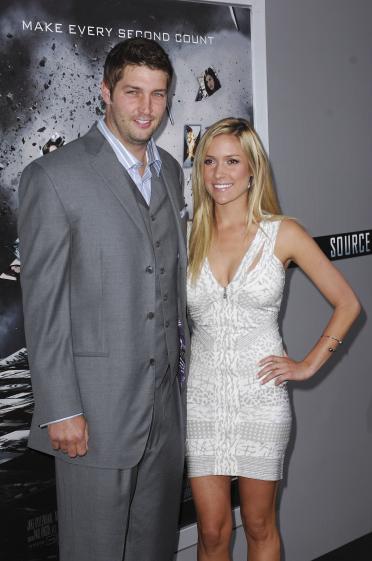
Kristin Cavallari is expecting her first child, the reality star herself confirms!
"We are thrilled to announce we are expecting our first child together," she and her fiance, NFL star Jay Cutler, said in a joint statement. "It's an amazing time in our life and we can't wait to meet the new addition to our growing family."
Last year was an up-and-down one for the Kristin 25, and Jay, 28, who got engaged, broke up, then got back together and soon got engaged a second time.
The former Hills star and Dancing with the Stars contestant said, "Sometimes, in order for things to get better, they have to end – even if it's momentarily."
Looks like it did wonders for the couple.
Shortly after their split, they became happier than ever it seems, with Jay dutifully attending her DWTS performances and she his Chicago Bears games.
Pico projectors are an easy way to increase the screen real estate of your mobile phone, but what if you'd rather not carry one around in your pocket or bulk up your phone's slim profile with a slip on solution? Well, a team of intrepid researchers may have come up with an elegant solution to your problem that can work with any smartphone and external display: virtual projection. The system works by using a central server that constantly takes screenshots of the external display and compares them with the images from the phone's camera to track its location. It then replicates what's on the handset's screen, while allowing you to add multiple image windows and position and rotate them as you see fit. Additionally, multiple users can collaborate and virtually project pictures or videos onscreen at the same time. Intrigued? See it in action for yourself in the video after the break.


![[ Back to EurekAlert! ]](http://www.eurekalert.org/images/back2e.gif) Public release date: 26-Jan-2012
Public release date: 26-Jan-2012 Share ]